My Stepmom Sold Everything From My Childhood and Called It “Junk” — Years Later, Her Final Letter Broke Me

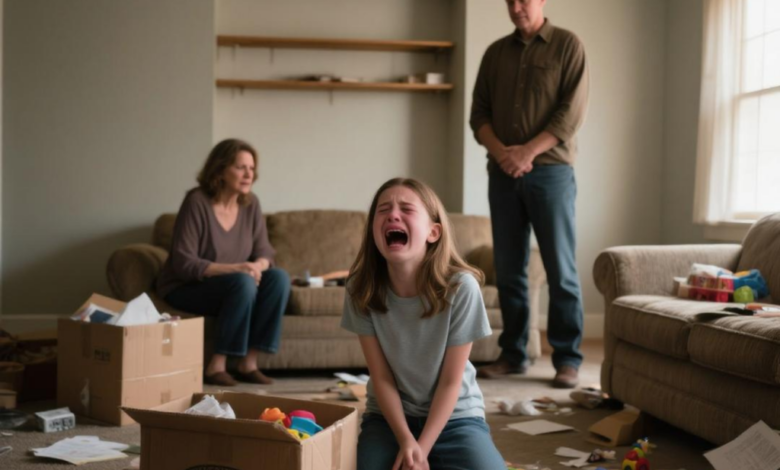
I was sixteen the day my stepmom boxed up my childhood.
I came home from school to find the living room stripped bare—no shelves, no clutter, no traces of the life I’d built there piece by piece. My comic books were gone. The shoebox of birthday cards I’d kept since kindergarten—gone. Even the old stuffed bear my mom gave me before she died—gone.
I remember standing in the doorway, backpack sliding off one shoulder, chest tight with panic.
“Where’s my stuff?” I asked.
She didn’t look up. “I sold it.”
I laughed, because the alternative felt unbearable. “What do you mean, you sold it?”
She turned, arms crossed, calm in that way that always made me feel small. “It was just junk. You’re too old to be clinging to that nonsense.”
Something broke in me. I shouted. I cried. I begged her to tell me it was a joke. My dad tried to mediate, but he spoke softly, standing too far back, as if this was weather he couldn’t control.
That night, I packed a bag. At seventeen, I moved out to a friend’s couch and told myself I didn’t need any of it—her house, her rules, her cold certainty about who I was supposed to be.
I didn’t forgive her. I didn’t try.
Years passed. I built a life that looked solid from the outside—jobs, relationships, independence—but that moment stayed lodged in me like a shard of glass. Whenever people talked about “doing what’s best,” my jaw tightened. Sometimes love didn’t feel like love at all. Sometimes it felt like erasure.
Then she died.
Suddenly. A stroke. No warning.
I went to the funeral out of obligation more than grief. I stood stiffly in the back, surrounded by people who spoke of her “practical nature” and “tough love”—phrases landing like pebbles in my chest.
Afterward, in the parking lot, my dad touched my arm.
“She made me promise something,” he said quietly, pressing an envelope into my hand. “She told me not to give this to you until… after.”
The envelope was plain. My name written across the front in her unmistakable handwriting.
I opened it there, between two parked cars, the sounds of polite mourning fading.
Inside was a list.
Item by item. My items.
The comic book collection—sold at a flea market, money deposited into an account labeled “college.”
The jewelry box—pawned, funds moved into an emergency savings account in my name.
The old guitar—sold to a neighbor, proceeds set aside for “first apartment.”
My hands started to shake.
Page after page detailed everything she had taken—and exactly where the money went. Tuition payments she never mentioned. A quiet safety net she built without asking for credit. Proof, in ink, that nothing had vanished. It had transformed.
At the bottom was a short note.
She admitted she wasn’t good at love. Didn’t know how to comfort or explain herself without sounding harsh. She believed I was too attached to my belongings, that I would have stayed frozen in a phase she thought would hold me back. Removing them was, in her mind, the only way to force me forward.
“This was the only way I knew how to protect your future,” she wrote. “I’m sorry if it hurt you. I did try.”
I sat on the curb and cried until my chest ached. Not the clean, relieving kind of cry—but the messy kind when two truths collide.
I still wish she had done things differently. I wish she had talked to me. Trusted me. Let me choose.
But now I understand something I didn’t before.
Sometimes people love with their heads instead of their hearts. Sometimes protection looks like loss until you see the full shape of it. And sometimes forgiveness isn’t about excusing the pain—it’s about finally understanding the intention behind it.
I folded the letter carefully and held it like one of the things she sold. This time, I didn’t let it go.