After I Lost My Baby, My Mother-in-Law Kicked Me Out—But Left a Secret I Was Never Meant to See

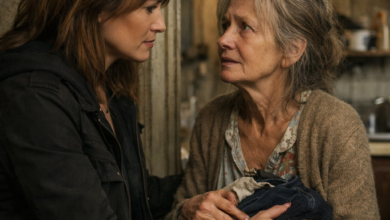
I lost my baby at thirty-two weeks and came home from the hospital with empty arms. The silence followed me through the front door like a shadow. No balloons. No congratulations. Just the hum of the refrigerator and the sound of my own breathing. My mother-in-law didn’t bother lowering her voice. She stood in the kitchen, arms crossed, eyes sharp, grief hardened into something bitter and mean.
“My son’s ex gave him kids,” she snapped. “You’re useless.”
I waited for my husband to speak—anything. He stared at the floor. His silence was louder than her words. That moment, something inside me broke cleanly—not dramatically, but with a quiet snap, like a thread pulled too tight.
I packed a suitcase the same day and drove to my parents’ house, eyes swollen, chest hollow. I didn’t cry on the road. I felt beyond tears.
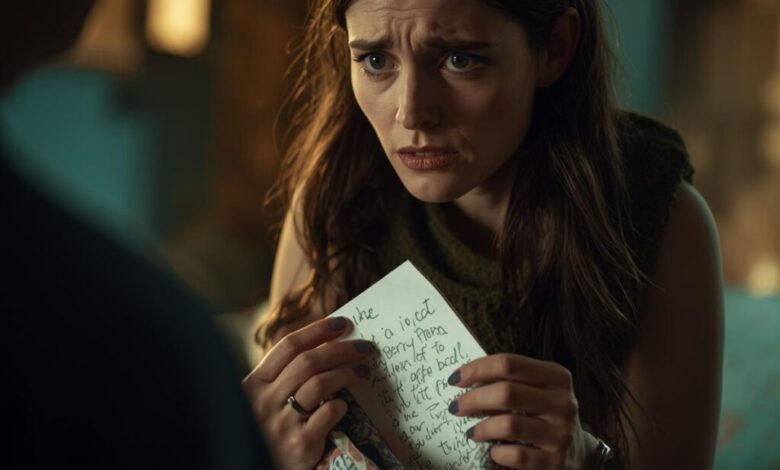
That night, as I unpacked, my hands froze mid-air. At the bottom of my suitcase were three photographs and a legal document I hadn’t packed. The photos showed a thin, poorly dressed little boy. In one, he stood barefoot on a cracked sidewalk. In another, he slept curled against a wall, ribs visible beneath his shirt.
My heart pounded. The nose. The eyes. The crooked half-smile. Recognition.
I unfolded the document with trembling fingers: adoption papers. Official. Final. My husband was not his mother’s biological child.
I sat on the floor, back against the bed, trying to understand why she would hide these things in my suitcase—right after throwing me out at my lowest point. It didn’t make sense. None of it did.
The next morning, my phone rang. It was her. She asked if we could meet.
I expected another round of humiliation. I almost said no. But curiosity—and something heavier—pulled me to a small café near the bus station.
She was already there, hunched over a cup of untouched coffee, crying silently. Not performative. Not angry. Just tired tears slipping down her face.
She didn’t insult me. She didn’t defend herself. She told me the truth.
At my age, she had also delivered a stillborn baby. She came home empty-handed, no one to comfort her. Grief hollowed her out until, one night walking home, she found a child asleep on the street—abandoned, starving, alone. That child was Paul. She took him home and raised him fiercely, loved him desperately.
But his biological background came with genetic challenges—ones she didn’t fully understand at first, which later affected the children from his previous relationship.
She said she had wanted to warn me, but she feared I wouldn’t listen.
“And now,” she said, voice breaking, “I’m afraid he’ll turn on you. That he’ll blame you. That he’ll call you barren if it happens again.”
She looked at me—not with contempt, but with fear.
“You don’t deserve that,” she whispered. “You should leave him while you still can.”
I sat stunned. Too much truth, too late. All the cruelty suddenly had context—not justification, but meaning. Her sharpness was armor. Her silence, survival.
Before we parted, she slid an envelope across the table. Inside was money—enough to breathe, enough to begin again.
“I saved this for you,” she said. “You’ll need it.”
She helped me start over. Quietly. Without telling her son. And while she hid so much from me for so long, I understood: she wasn’t cruel by nature. Life simply hadn’t given her many chances to be kind.