My sister took the $800 that Grandma had given to my 10-year-old daughter for her birthday and remarked, “My son requires a new phone more.”

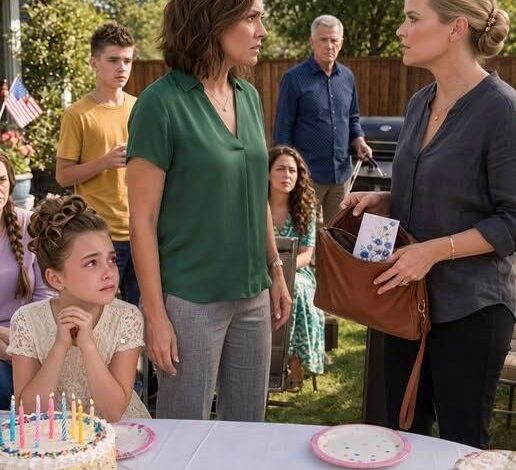
At my daughter Lily’s 10th birthday party, my sister Emily reached beneath Lily’s plate, took the $800 Grandma had given her, and slipped it into her purse.
“Aiden needs a new phone more,” she announced.
My father defended her. My mother stayed silent. And Lily—the little girl I had adopted from foster care—smiled as if nothing had happened.
That smile broke my heart.
For years, I had paid my family’s bills, covered emergencies, funded vacations, and even bought my nephew an expensive phone. Meanwhile, Lily was repeatedly excluded from family traditions, forgotten on outings, and treated as though she belonged less than the biological grandchildren.
That night, Lily asked me a question I could barely bear to hear:
“Does Grandpa like Aiden more because Aiden is really his?”
I realized I had spent years keeping the adults happy while my daughter quietly learned to accept less.
The next morning, I closed the family account I had been funding with $1,200 every month. I transferred the remaining $29,842 to my father so they would have time to adjust, then ended the automatic payments.
My family exploded.
Emily called me selfish. My father accused me of overreacting. But I refused to reopen the account.
“I didn’t cut anybody off,” I told my sister. “I stopped paying.”
Eventually, Emily returned every dollar and apologized directly to Lily. My father admitted he had been wrong, and my parents slowly began treating Lily with the care she deserved. It wasn’t an instant reconciliation, but the family finally started changing.
Grandma gave Lily a small blue lockbox and another $800, reminding her that gifts with her name on them belonged to her.
Years later, Lily opened that box and handed it to me.
“I don’t need to lock things from family anymore,” she said.
She had grown into a confident teenager who no longer smiled to hide her pain. My family still asks for help sometimes, and sometimes I say yes—but now, help comes with honesty, respect, and clear boundaries.
I learned that love doesn’t mean paying for everyone’s comfort while your own child feels unwanted.
I wasn’t responsible for keeping every adult happy. I was responsible for making sure my daughter knew she belonged.