When my mother-in-law passed away, I felt something I wasn’t proud of—relief. She had never been kind to me, never offered warmth or acceptance, and I had long accepted that we simply didn’t get along.
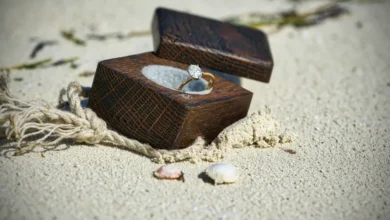
At the memorial, my husband quietly handed me a small box. “She asked me to give this to you on the day of her funeral,” he said. Inside was a silver necklace with a small sapphire pendant—something I had never seen before. Confused, I asked if it was really meant for me. He confirmed it was, and added that she wanted me to open it alone.
I waited until the house was empty that night. Sitting on the bed, I studied the necklace. It looked old, almost vintage, and on the back were faint initials—L.T., my initials. That detail unsettled me. I searched the box more carefully and found a folded letter addressed to me in her handwriting.
What I read changed everything I thought I knew about her. In the letter, she admitted she had been wrong about me all along. She explained that her dislike wasn’t truly about who I was, but about what I reminded her of—her younger self. A version of her that had been ambitious, outspoken, and full of dreams before life and marriage had worn her down.
She confessed that she had projected her regrets onto me, judging me for qualities she had once had but lost along the way. She admitted she had feared I would suffer the same fate she did, and instead of showing kindness, she pushed me away. Then she revealed the truth about the necklace—it had once belonged to a man she loved before her marriage, and the initials referred to him. The pendant, she said, was also meant to represent the daughter she never had. In some way, she had come to see that “daughter” in me.
I was shaken. The woman I had believed to be cold and bitter had left behind something far more complicated—a confession of regret and a life she never fully lived.
In the weeks that followed, more secrets surfaced. A key she left led us to an attic filled with journals and paintings. Through them, I discovered her hidden life—her lost love, her abandoned dreams, and the quiet grief she carried for decades. She had once wanted to be an artist, to live differently, to choose herself, but never did.
One painting in particular stayed with me: a woman alone in a garden, labeled “Me, before I disappeared.”
As I read more, I realized she hadn’t simply disliked me—she had been mourning the life she gave up, and I had unknowingly reflected everything she once hoped to be.
Eventually, I shared her artwork, and it found unexpected recognition. People connected with it deeply. That led to an exhibition in her honor, and later, the discovery of a hidden account she left behind containing money and a final message encouraging me to pursue something meaningful with it.
With that, I opened a small gallery for overlooked artists, especially women whose voices had never been heard. I named it The Teardrop, after her necklace.
Over time, I understood something important: she hadn’t truly been my enemy. She was someone shaped by regret, and I had simply been the mirror she couldn’t face. In the end, she didn’t just leave behind explanations—she left me purpose, direction, and a deeper understanding of forgiveness.
Even now, years later, I still wear the necklace. And I finally see her not as she treated me, but as she truly was: a woman with a story that never got told until she was gone.