My Son Left Three Pet Cages at My House After His Father’s Funeral—He Had No Idea I Was Leaving on a One-Year Cruise

I had just buried my husband when I made a decision no one in my family knew about.
That same week, I bought a ticket for a one-year cruise around the world.
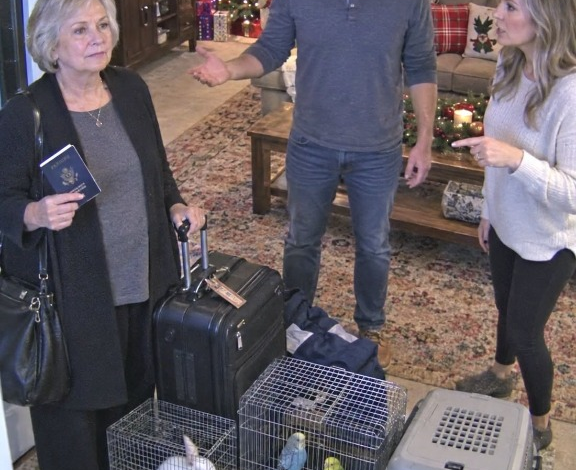
So when my son showed up at my house and dumped three pet cages in my living room as if I were his personal servant, I knew something inside me had finally changed.
My daughter-in-law didn’t even bother saying hello.
She shoved the cages onto my rug and said, “Here are the instructions.”
I smiled.
Because by sunrise, I would be gone.
And my disappearance was about to turn their comfortable lives upside down.
The house still smelled of funeral lilies and melted candle wax when Austin walked through the front door without knocking.
Ernest had been dead for only seven days.
I had buried him on a cold Tuesday, dressed in the white linen shirt he loved. His rosary rested between his folded hands, and I had slipped a tiny photograph from our trip to Key West into his pocket.
For seven days, I had cried until there were no tears left.
On the eighth morning, I bought the cruise ticket.
Not because I wanted attention.
Not because I was trying to escape my grief.
But because I finally understood something after forty years of putting everyone else first:
Grief was painful. But being taken for granted was worse.
When Ernest became ill, I sold the earrings he had given me on our wedding anniversary to help pay for his medication.
When Austin lost his job, I emptied my savings because he promised he only needed temporary help.
When Chloe had her baby, I practically moved into their house. For three months, I woke up at night to prepare bottles while Chloe slept.
Later, she told everyone I was “lucky to have something to keep me busy.”
Then came Ernest’s funeral.
I thought my son would hold me.
Instead, while I was still standing beside his grave, Austin looked at the dirt on my shoes and asked,
“Mom, have you decided what you’re going to do with the house?”
That question haunted me for seven days.
So when Austin returned wearing dark sunglasses and a brand-new shirt, I already knew exactly what had happened.
He wasn’t the little boy who once held my hand crossing the street.
He had become someone who believed his mother existed to solve his problems.
“Mom, we’re going to the Bahamas for a few days,” he announced.
“That sounds nice, sweetheart.”
“You’re going to watch the pets.”
Chloe walked in behind him carrying three cages.
Two parakeets screamed from one.
A frightened white rabbit trembled inside another.
And a cat was squeezed into an old carrier, pressed against the back as if it somehow understood that it had been abandoned too.
Chloe placed the cages directly beside Ernest’s memorial photograph.
Not a hug.
Not a condolence.
Not even a simple, “How are you doing?”
Just cages, food, and instructions.
“Change the birds’ water twice a day,” she said while scrolling through her phone. “Don’t give the rabbit lettuce. The cat gets nervous, so don’t let him out. And clean everything properly because the smell gets terrible.”
I stared at her.
“Chloe, I buried my husband a week ago.”
She sighed.
“Oh, Theresa. Everyone has problems.”
Austin said nothing.
He didn’t defend me.
He didn’t even look uncomfortable.
Instead, he shrugged.
“That’s why you’re here, Mom. You’ll just be sitting around alone anyway.”
The birds continued screaming.
The candle beside Ernest’s photograph flickered.
And something inside me became completely still.
For the first time, I wasn’t angry.
I wasn’t hurt.
I wasn’t even surprised.
I simply looked at the cages.
Then at my son.
Then I smiled.
“Of course, sweetheart. Leave them with me.”
Chloe looked almost disappointed that I hadn’t argued.
“We left a spare key to our apartment,” she added. “If you need more food, you can go get it.”
Austin leaned down and kissed my forehead.
“Thanks, Mom. We can always count on you.”
The front door closed behind them.
And those words remained in the silence.
We can always count on you.
That had always been the problem.
I had been their emergency fund.
Their babysitter.
Their nurse.
Their driver.
Their spare bedroom.
Their open wallet.
Their solution whenever life became inconvenient.
But that night, I didn’t cry.
I walked into my bedroom and pulled my blue suitcase from the closet.
Three dresses.
Two pairs of sandals.
My passport.
Ernest’s last bottle of perfume.
And the legal folder my attorney had prepared weeks earlier—without Austin knowing.
Then I called my neighbor, Mrs. Mary.
“Is your nephew still able to take the animals?”
“Yes, Theresa,” she replied. “He’s already arranged everything with the shelter.”
By four in the morning, the cages were gone.
The living room was spotless.
The house was quiet again.
I blew out Ernest’s candles and placed my keys on the table beside a single folded note.
It didn’t say goodbye.
It didn’t say I was sorry.
It simply read:
“Austin, when you read this, don’t call me. Call your lawyer.”
At 5:30 a.m., I climbed into a taxi headed toward the Port of Miami.
The sky was still dark.
Rain misted the windshield.
And for the first time in decades, I was carrying nothing except my passport and a small suitcase.
Then I saw it.
The cruise ship stood ahead of me, enormous and glowing against the darkness, like an entire city preparing to disappear into the ocean.
My phone started vibrating.
Chloe.
Then Austin.
Then Chloe again.
I ignored every call.
Until one message appeared.
I opened it.
“Mom, what did you do? There’s someone from the court at the house saying the property isn’t ours anymore.”
I stared at the screen.
Then I smiled.
Another message arrived.
It was a photograph.
Austin was standing in my living room, pale and frozen, holding my note in one hand.
But that wasn’t what caught my attention.
Behind him, sitting on the dining table, was another folder.
A folder with his name written across the front.
And whatever was inside it was about to change everything.
THE CRUISE TICKET — PART 2
Austin stared at the folder with his name on it.
His hands were shaking.
“What is this?” he whispered.
The attorney standing beside him didn’t answer immediately.
Instead, she looked at him and said calmly,
“You should probably sit down.”
Austin opened the folder.
The first page made his face go completely white.
It was the deed to my house.
But beneath it was something even more shocking.
A signed legal agreement showing that the house had been placed into a trust months before Ernest died.
Austin flipped through the pages.
“No…”
The attorney continued.
“Your mother is the sole beneficiary.”
Austin looked up.
“But she’s my mother. This is our family home.”
The attorney’s expression didn’t change.
“No, Mr. Bennett. It was never yours.”
Then Austin found the final page.
A handwritten note.
My handwriting.
“You asked me what I planned to do with the house at your father’s funeral. Now you know.”
Austin dropped the papers onto the table.
“Why would she do this?”
The attorney finally answered.
“Because your mother has spent forty years protecting you from the consequences of your own decisions.”
Austin grabbed his phone.
He called me.
Straight to voicemail.
He called again.
Nothing.
Meanwhile, thousands of miles away, I stood on the balcony of the cruise ship as Miami disappeared behind me.
For the first time since Ernest’s death, I felt peaceful.
I touched the little bottle of his perfume inside my suitcase.
“I think you’d like this,” I whispered.
Then my phone rang.
It was Mrs. Mary.
“Theresa,” she said softly, “Austin came over here.”
“I know.”
“He was furious.”
“I expected that.”
“He asked me where you went.”
I smiled.
“What did you tell him?”
“That you finally went somewhere nobody could reach you.”
I laughed quietly.
Then Mary lowered her voice.
“Theresa… there’s something else.”
I stopped smiling.
“What?”
“Your daughter-in-law came to my house too.”
“What did she want?”
“She said you had no right to leave them without warning.”
I looked out at the ocean.
“No warning?”
I almost laughed.
“Mary, they left three animals in my living room seven days after I buried my husband.”
There was silence.
Then Mary said,
“I know.”
The ship’s horn sounded in the distance.
I closed my eyes.
“I’ve spent my entire life being available to everyone,” I said. “I’m not doing that anymore.”
Back at home, Austin was still reading the documents.
Then he reached the last envelope.
It had one word written across it:
ERNEST.
His expression changed.
He opened it.
Inside was a letter from his father.
Austin began reading.
“My son, if you’re reading this, your mother has finally done what I begged her to do for years.”
Austin stopped.
His eyes moved rapidly across the page.
The letter explained everything.
Ernest had known exactly how Austin treated his mother.
He had watched Theresa pay bills, cover debts, babysit children, sacrifice her savings, and constantly put her own needs last.
And before he died, Ernest had asked his attorney to protect her.
The house.
The remaining savings.
The investments.
Everything had been legally secured so that Theresa could never be pressured into giving it away.
At the bottom of the letter, Ernest had written:
“Your mother doesn’t owe you a life.”
Austin sat down.
For the first time, he cried.
But Chloe wasn’t crying.
She was furious.
“This is ridiculous!” she shouted. “She can’t just disappear!”
The attorney looked at her.
“She can.”
“She is his mother!”
“And you’re her daughter-in-law,” the attorney replied. “That doesn’t give you ownership of her property.”
Chloe froze.
Then she whispered,
“What about the money?”
The attorney closed the folder.
“That depends on what you’re talking about.”
Chloe didn’t answer.
Austin slowly turned toward her.
“What money?”
She looked away.
“Nothing.”
“Chloe.”
“It’s nothing!”
But Austin had already begun putting the pieces together.
The Bahamas trip.
The expensive hotel.
The new clothes.
The restaurant reservations.
They hadn’t planned to spend a few days away.
They had planned to use his mother’s house as collateral for a loan.
And Chloe had convinced him that after Ernest’s death, Theresa would eventually give them access to everything.
Austin looked sick.
“She knew?”
The attorney shook her head.
“No.”
“Then why did Mom leave?”
The attorney picked up her briefcase.
“Because she finally figured it out.”
Three days later, I was sitting alone at a small table on the cruise ship when a message arrived.
It was from Austin.
Only four words.
“Dad was right. I’m sorry.”
I stared at the message for a long time.
Then I typed one sentence.
“I hope you become the son he believed you could be.”
I didn’t send it immediately.
I looked at the ocean.
At the sunrise.
At the endless horizon.
Then I pressed send.
A few seconds later, another message appeared.
“Will you come home?”
I smiled.
For years, home had meant a place where everyone needed something from me.
Now I realized something.
Home could also mean peace.
I put my phone face down.
The ship continued forward.
And somewhere behind me, my son was finally learning the lesson I had spent forty years teaching him:
Losing access to your mother is not the same thing as losing your mother.
She had not abandoned her family.
She had simply stopped abandoning herself.